Saturday, March 18, 2017

Panduan Menulis Proposal Penelitian


Sebagai seorang mahasiswa tingkat akhir tentunya proposal penelitian menjadi syarat mutlak untuk menyelesaikan studi di universitas. Pada dasarnya proposal penelitian adalah bentuk pengajuan sebelum melakukan penelitian dengan berbentuk skripsi. Perbedaan proposal penelitian dengan skripsi salah satunya tidak berbentuk bab atau chapter lebih dekatnya mirip dengan makalah.

Panduan Menulis Proposal Penelitian


Apa itu Proposal Penelitian?

Research proposal, atau selanjutnya disebut proposal penelitian, adalah sebuah dokumen singkat yang berisi rencana seseorang untuk melakukan penelitiannya. Sebuah proposal penelitian untuk studi lanjut (S2 maupun S3) bisa sangat singkat (1-2 halaman atau 500 kata) atau sangat panjang (15 halaman atau 6000 kata), tergantung persyaratan dari universitas atau program studi yang dituju.

Proposal penelitian yang baik harus memiliki beberapa kriteria di bawah ini:

  1. Judul penelitian harus tegas dan menarik. Judul atau tema sebaiknya menunjukkan isi dari penelitian itu sendiri.
  2. Latar belakang harus jelas dan mendukung. Apa yang membuat kita ingin dan perlu meneliti hal tersebut? Apa yang kita saksikan (observasi) di sekitar kita? Apa yang kita telah baca dan ketahui? Apa yang sedang jadi persoalan? Fakta dan fenomena apa yang terjadi atau teramati sehingga kita merasa perlu adanya penelitian? Mengapa penelitian yang ingin dan perlu kita lakukan ini penting (adakah gap/celah antara apa yang ada saat ini dan yang ingin kita teliti)?
  3. Pernyataan penelitian (research statement atau thesis statement) dan maksud harus disampaikan dengan tegas dan jelas. Maksud (purpose) ini kadang bermakna sama atau kabur dengan tujuan (aim) dan seringkali penggunaanya tertukar. Untuk proposal penelitian, hal ini tidak masalah, sejauh pernyataan penelitian kita jelas. Pernyataan penelitian ini bermakna sama dengan pertanyaan penelitian (research question) yang menjadi motivasi filosofis mengapa penelitian itu dilakukan.
  4. Adanya alasan (justifikasi) mengapa penelitian ini penting dilakukan, yang didukung oleh studi literatur tentang penelitianpenelitian yang telah dilakukan sebelumnya dan pernyataan mengenai kontribusi dari penelitian ini.  


Tujuan Proposal Penelitian

Proposal penelitian bertujuan untuk meyakinkan calon pembimbing, universitas atau program studi yang dituju bahwa:

  1. Ada kebutuhan akan penelitian tersebut, dan penelitian ini signifikan dan penting. Selain itu, penelitian yang akan dijalankan ini merupakan sesuatu bentuk pencarian yang asli.
  2. Ada hal baru (original) dan asli (genuine) yang diberikan oleh hasil penelitian ini (original contribution to the body of knowledge).
  3. Penelitian ini merupakan sesuatu yang terkait dengan penelitian lain dan berhubungan dengan school of thoughts pada topik tersebut, dan berorientasi pada teori tertentu.
  4. Penelitian merupakan hal yang dapat dilakukan (feasible) berdasarkan pertimbangan batasan waktu (sesuai masa studi), dana, ketersediaan pembimbing (kesesuaian sumber daya di universitas atau program studi atau kesesuaian bidang ilmu calon pembimbing) dan akses terhadap data yang diperlukan.
  5. Penelitian sesuai dengan kemampuan dan latar belakang pendidikan peneliti ybs (calon mahasiswa).

Struktur Penulisan Proposal

Sebuah proposal penelitian biasanya terdiri dari hal-hal berikut (tergantung panjang atau pendeknya sebuah proposal):

  1. Halaman depan (cover page)
  2. Pendahuluan atau Latar Belakang
  3. Maksud dan Tujuan Penelitan
  4. Studi Literatur
  5. Usulan Metodologi Penelitian
  6. Rencana Penelitian (Jadwal/Rencana Waktu)
  7. Struktur Tesis Signifikansi dan Hasil yang Diharapkan
  8. Daftar Pustaka

Halaman depan (Cover page)
Halaman depan biasanya berisi judul dan dan siapa calon mahasiswa/peneliti yang akan melakukannya. Pemilihan judul merupakan kriteria penting dalam penulisan proposal penelitian. Judul harus menjelaskan fokus penelitian, singkat, mudah dipahami dan menggunakan kata-kata kunci di bidang studi yang dituju.
Selain itu, halaman muka biasanya menunjukkan juga universitas, program studi dan degree atau level pendidikan yang dituju (Master of Engineering, Master of Philosophy atau Doctor of Philosophy).

Pendahuluan atau Latar Belakang (Background)
Pendahuluan untuk sebuah proposal penelitian harus singkat (cukup dua atau tiga paragraf, bahkan mungkin satu paragraf). Proposal harus jelas dan padat, langsung pada fokus penelitian. Pendahuluan perlu memberikan arah atau penjelasan mengenai area penelitian sekaligus sub area yang dituju (spesifik). Selanjutnya, pendahuluan perlu menunjukkan research gap atau celah dari penelitian yang ingin diisi, dan dilanjutkan dengan pertanyaan penelitian (research question).
Pendahuluan ditutup dengan pernyataan penelitian atau yang sering disebut thesis statement. Thesis statement merupakan usulan jawaban atas pertanyaan penelitian.

Maksud dan tujuan penelitian (The Aim and Purpose of The Study)
Seperti sudah dijelaskan sebelumnya, maksud penelitian merupakan tujuan yang bersifat luas dalam area penelitian yang ingin dilakukan. Dalam contoh yang diberikan, maksud penelitian adalah “to describe the role of marketing management in agricultural marketing theory and practice”. Beberapa pilihan kata kerja yang yang sering digunakan untuk menyatakan pernyataan penelitian (thesis statement) adalah:
- study - report
- present - describe - explore - examine
- develop - introduce
- show - aim to
- focus - discuss
Selanjutnya perlu dituliskan tujuan penelitian yang merupakan bentuk rinci dan lebih teknis dari maksud penelitian. Tujuan merupakan penjabaran dari maksud menjadi sesuatu yang lebih terukur dan jelas bagaimana cara pencapaiannya (menggambarkan metodologi yang diusulkan). Untuk mempermudah penulisan tujuan, biasanya disebutkan What, How, Why dan What if dari permasalahan ini.

Studi Literatur (Literature Review)
Studi literatur berisi tentang penjelasan apa yang telah dilakukan oleh peneliti lain di area yang akan diteliti dan apa yang akan kita lakukan. Studi literatur biasanya diawali dengan pembahasan teori dan penelitian yang telah memberi signifikansi dalam area penelitian tersebut (dapat juga berisi: state-of-the-art, school of thoughts). Studi literatur selanjutnya menjabarkan gap atau celah dalam literatur secara lebih detil dibandingkan dalam pendahuluan. Studi literatur dapat juga menjelaskan definisi dari istilah kunci (key terms) yang digunakan.
Sebagai penutup, studi literatur biasanya juga berisi model atau kerangka kerja teoritis (theoretical framework) yang akan digunakan dalam penelitian.
Sebuah studi literatur dapat berbentuk penggambaran (deskripsi), pengategorian (klasifikasi) atau pengategorian dan evaluasi.
(Examiners) wish list for the literature review:
- All the literature is included;
- The focus of the review is prominent and sharp;
- “Everything I’ve ever read syndrome: is avoided;
- All sources are relevant and recent;
- The study is located in the context of previous research;
- Literature on methodology is included.

Usulan Metodologi Penelitian
Dalam proposal penelitian, metodologi tidak perlu digambarkan secara detil, tapi perlu ada penjelasan atas pilihan metodologi tertentu yang akan digunakan pada penelitian ini. Misalnya, apakah penelitian akan dijalankan dengan metode penelitian kuantitatif atau kualitatis, apakah ada studi kasus yang akan digunakan dan bentuk studi kasusnya.
Pada metode penelitian kuantitatif, perlu dijelaskan juga, alat ukur statistika apa yang akan digunakan, variabel apa saja yang akan diuji. Selain itu, dalam usulan metodologi penelitian, dapat juga dijelaskan kemudahan akses terhadap data maupun cara analisis data yang akan dilakukan.

Rencana Penelitian
Rencana penelitian dilihat dalam sebuah proposal penelitian sebagai kemampuan calon peneliti (calon mahasiswa) dalam pengelolaan waktu studinya, dan kemampuan calon peneliti dalam menentukan arah dan rencana penelitiannya selama studi. Hal ini menunjukkan kemampuan pengorganisasian waktu dan pekerjaan.
Rencana penelitian dapat ditunjukkan dalam bentuk tabel ataupun timeline (Gantt Chart) ataupun peta aliran proses.
Dalam proposal penelitian yang singkat, rencana penelitian tidak perlu disajikan dalam bentuk tabel namun dapat dijelaskan dalam satu sampai dua kalimat saja, menjelaskan lama penelitian dan pentahapannya.
Dalam rencana penelitian yang terkait dengan proyek atau beasiswa tertentu, penulisan rencana studi lapangan (field work) menjadi aspek yang penting agar lembaga pemberi beasiswa dapat menentukan anggaran untuk field work yang biasanya membutuhkan anggaran ekstra.

Struktur Tesis
Struktur tesis tidak selalu harus ada dalam proposal penelitian yang ditujukan untuk mendaftar sekolah, namun perlu ada pada proposal penelitian setelah diterima di program studi/universitas yang dituju, Struktur tesis berisi fokus dari masing-masing bab dalam tesis.

Signifikansi dan Hasil yang Diharapkan
Signifikansi dan hasil yang diharapkan biasanya hanya merupakan prediksi dari tujuan penellitian dan dari pernyataan tesis (thesis statement) yang telah dibuat. Pada proposal penelitian umum yang digunakan untuk mendaftar ke program studi atau universitas tertentu, signifikansi dan hasil yang diharapkan tidak diperlukan sejauh thesis statement sudah terbangun dengan baik. Namun, jika proposal penelitian dibuat terkait dengan beasiswa atau proyek tertentu, maka bagian ini merupakan sesuatu hal yang penting.
Jika kita melamar beasiswa yang berhubungan dengan kerja sama antar negara (seperti Australia's Development Awards yang ditujukan bagi orang Indonesia), hal yang cukup penting untuk dituliskan adalah manfaat penelitian itu bagi Indonesia. Namun, penulisan manfaat ini perlu dipertimbangkan dengan baik sehingga bukan sesuatu manfaat yang bersifat umum saja.

Daftar Pustaka
Penggunaan daftar pustaka yang baik merupakan salah satu hal yang penting karena hal ini dapat menunjukkan kemampuan dan pengalaman kita dalam melakukan penelitian dan membuat pelaporan yang andal dan valid. Penulisan daftar pustaka akan lebih baik jika mengikuti tata cara pereferensian yang digunakan oleh calon pembimbing atau gaya selingkung baku yang dimililiki oleh program studi yang dituju.

Itulah artikel tentang panduan menulis proposal yang benar. Artikel ini bukan merupakan satu-satunya pegangan dalam membuat research proposal (proposal penelitian). Namun, artikel ini diharapkan dapat memberikan gambaran mengenai research proposal dan bagaimana mahasiswa dapat menuliskan rencana studinya (baik S1, S2 jalur riset maupun S3) dengan baik sehingga dapat mengomunikasikan rencana studinya kepada calon pembimbing dan universitas yang dituju.
Jika artikel ini berguna, silakan disebarkan informasinya kepada orang lain yang membutuhkan. Kami juga mengharapkan adanya masukan, kritik, saran dan pertanyaan mengenai hal-hal yang ada di artikel ini supaya artikel ini dapat menjadi lebih berguna bagi mereka yang akan melanjutkan studi.

References 

  • http://madeandi.com/2012/06/26/cara-membuat-proposalpenelitian-untuk-beasiswa-luar-negeri/ dan dari Centre of Excellence in Learning and Teaching, the University of Melbourne
  • http://tlu.fbe.unimelb.edu.au/pdfs/ helpsheets/ research_skills/ research_proposal.pdf
  • http://www.lc.unsw.edu.au/onlib/thesis.html; http://www.education.monash.edu.au/students/current/study-resources/ proposalwriting.html
  • http://www.education.monash.edu.au/students/current/studyresources/proposalwriting.html
  • http://madeandi.com/2012/06/26/cara-membuat-proposal-penelitian-untukbeasiswa-luar-negeri
  • http://tlu.fbe.unimelb.edu.au/pdfs/helpsheets/research_skills/research_propo sal.pdf
  • http://webservices.cofa.unsw.edu.au/documents/download/2
  • King, M., 1999, What Examiners Typically Say [Presentation]

Friday, March 17, 2017

Contoh Surat Undangan Resmi Pemerintahan dan Organisasi

Contoh Surat Undangan Resmi | Pada dasarnya jenis surat ada 2 yaitu resmi dan tidak resmi. Surat resmi adalah jenis surat yang digunakan untuk acara / tujuan resmi. Surat resmi sendiri ada banyak sekali macamnya, seperti surat undangan resmi. Surat undangan resmi  adalah surat undangan yang biasanya dikeluarkan oleh organisasi atau instansi dan ditujukan kepada perseorangan ataupun organisasi / instansi lain. Berbeda dengan surat tidak resmi, untuk surat undangan resmi ini penulisnya harus menggunakan bahasa baku dan penulisannya pun harus sesuai dengan EYD. Selain itu, ciri utama dari adanya surat undangan resmi ini adalah adanya kop surat atau kepala surat. Kop surat ini adalah bagian paling atas surat yang biasanya berisikan nama organisasi atau instansi, alamat, nomer fax dan hal lain tentang organisasi atau instansi tersebut.

Surat Undangan Resmi
Surat undangan resmi, dalam kop surat juga terdapat nomer surat, lampiran dan perihal surat. Hal ini adalah sebagai petunjuk bahwa surat yang dikeluarkan adalah surat yang sah dan resmi. Nomer surat ini akan dikeluarkan oleh pihak pembuat surat, dengan menyesuaikannya terhadap acara atau pun hal lain sesuai pihak pembuat. Lalu untuk hal di isikan dengan tujuan pembuatan surat tersebut. Karena ini merupakan surat undangan maka hal diisi dengan undangan yang artinya mengundang pihak yang dituju.
Untuk lampiran, biasanya dikosongkan atau ada juga yang diisi dengan pelampiran maupun segala sesuatu yang dilampirkan bersama surat tersebut. Mengapa banyak yang mengosongkan lampiran? Karena sangat jarang surat undangan diberi tambahan yang datang bersamaan dengan surat tersebut. Untuk format penulisan surat undangan resmi sendiri sebenarnya tidak jauh berbeda dengan surat pada umunya. Untuk lebih jelasnya, berikut ini format penulisan surat undangan resmi :

1. Kop surat
2. Tanggal pembuatan surat
3. Nomer surat
4. Hal (undangan)
5. Lampiran
6. Alamat tujuan
7. Salam pembuka
8. Isi Surat
9. Salam penutup
10.Pengirim
11.Tembusan
12.Inisial

Berikut adalah contoh suarat undangan resmi yang benar:

Contoh Surat Undangan Resmi Instansi


PEMERINTAH PROPINSI DAERAH JAWA BARAT
DINAS PENDIDIKAN
SEKOLAH MENENGAH PERTAMA NEGERI 8TASIKMALAYA
JL. Panututan 25 No.41 Tasikmalaya Telp. (0265)XXXXXXX Kode Pos 46196

 Tasikmalaya, 8 Maret 2015
No. : 227/55 /.202 / 2016                
Lampiran : ...............................
Perihal : Undangan Ambil Raport Yth. Bapak/Ibu/Orang Tua / Wali
Peserta Didik Kelas VII, VII
SMP N 8
Di Tasikmalaya


Dengan ini kami sampaikan undangan untuk ambil Raport Semester Genap Untuk Kelas VII tahun pelajaran 2014-2015 yang akan dilaksanakan pada :

Hari : Jum'at
Tanggal : 5 Juli 2015
Waktu : 10.00 WIB
Tempat : Di Kelas Masing-Masing

Demikian undangan ini, semoga dapat hadir pada waktu yang tepat, apabila ada perubahan jadwal akan diberitahukan kemudian, atas perhatian dan kerjasamanya kami ucapkan terimakasih.

Hormat Kami,
Kepala SMP N 8 Tasikmalaya

tanda tangan dan stempel

Nama : xxxxxxxxxxxxxxx
NIP : xxxxxxxxxxxxxxxxx


Contoh Surat Undangan Resmi Osis

 Tasikmalaya, 08 Maret 2015
OSIS SMA Negeri 8 Tasikmalaya
Jl. Mulyasari No. 8 Tasikmalaya

No: 01/OSIS/UND EX/V/14
Lamp : -
Hal: Undangan PORSENI (Pekan Olahraga dan Seni)

Kepada Yth
Pengurus OSIS
SMAN 8 Tasikmalaya
Jl. Mulyasari No. 8 Tasikmalaya

Dengan hormat,

Sehubungan dengan akan berakhirnya tahun ajaran 2010/2014, kami selaku pengurus OSIS SMA Negeri 5 Surabaya memohon kehadiran perwakilan sekolah untuk mengikuti berbagai perlombaan yang akan diselenggarakan pada :

Hari : Senin, 08 September 2016 - Kamis, 12 Maret 2015
Waktu : Pukul 08.00 WIB S/D Selesai
Tempat : Aula SMA Negeri 8 Tasikmlaya
Acara : PORSENI (Pekan Olahraga Dan Seni)

Karena cukup pentingnya acara tersebut, kami mengharapkan kedatangan para perwakilan sekolah dan dapat hadir tepat waktu.

Hormat kami

Abraham SA


Dari kedua contoh surat undangan resmi yang benar tersebut, terlihat jelas bahwa pada surat undangan pencantuman format surat dibuat secara runtut dan lengkap. Untuk contoh surat undangan resmi nomer dua, dimana tidak menyertakan alamat lengkap serta hal lain yang berkaitan dengan perusahaan, dibuat demikian karena surat ditujukan pada salah seorang yang merupakan anggota perusahaan. Namun, jika surat undangan ditujukan kepada pihak luar, maka kop surat harus lengkap dengan alamat, nomer telephone, nomer fax dan lain-lain. Hal ini selain sebagai bentuk formalitas juga sebagai penanda kejelasan pengirim surat. Dan yang paling penting dalam pembuatan surat undangan resmi adalah susunan bahasa yang dibuat harus benar-benar efektif dan jelas. Sebab, biasanya pengeluaran surat undangan resmi ini dibuat untuk acara yang penting, sehingga penerima harus mengetahui dengan jelas maksud dari surat undangan yang diterimanya. Semoga dapat bermanfaat.

Thursday, March 16, 2017

PDF Book Bilingual Speech A Typology of Code Mixing by Peter Muysken

Bilingual Speech A Typology of Code Mixing by Peter Muysken | The book was published by The Press Syndicate of The University of Cambridge in 2000 and printed in United Kingdom at Cambridge University Press.

Bilingual Speech A Typology of Code Mixing by Peter Muysken


Content of The Book 

1. The Study of Code Mixing 
2. Differences and Similarities between Languages
3. Insertion
4. Alternation
5. Congruent Lexicalization
6. Function Words
7. Bilingual Verbs
8. Variation in Mixing Patterns
9. Code Mixing, Bilingual Speech, and Language Change

Get the PDF book of Bilingual Speech A Typology of Code Mixing by Peter Muysken HERE

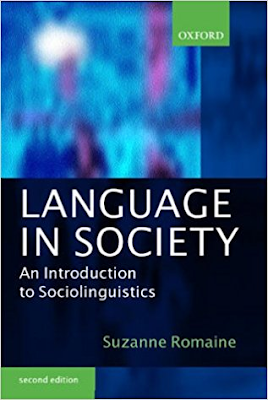
PDF Book Suzanne Romaine Language In Society 2nd Edition

Language In Society: An Introduction to Sociolinguistics by Suzanne Romaine | This book was published in the United States by Oxford University Press. Inc New York 2000.

Suzanne Romaine Language In Society 2nd Edition

Contents of Language In Society by Suzanne Romaine 2nd Ed

Chapter 1- Language in Society/Society in Language, Language v. dialec, Language and dialect in Papua New Guine, Language and dialect in Europe, English: language and dialect, Accent v. dialect, Register and style, Speech communities and communicative competence Language, society, and reality: different words, different worlds?

Chapter 2 - Language Choice Societal multilingualism, Domains, Diglossia Language shift and death, Code-switching.

Chapter 3 - Sociolinguistic Patterns, Language and social class, Style, Language and style, Gender, Language and age, Language and social network, Standardization, Standardization and its effects in Papua New Guinea.

Chapter 4 - Language and Gender, Sex and gender, Man-made language?, Learning to talk like a lady, Gossip v. shop talk, Language reform: a msguided attempt to change herstory?

Chapter 5 - Language Change in Social Perspective, Dialectology and language change, The relationship between variation and change, Using the present to explain the past and the past to explain
the present, Change in real v. apparent time, Language change and social ideology.

Chapter 6 - Pidgin and Creole Languages, Distribution, Origins and structure, The creole continuum, Pidgins and creoles in social context.

Chapter 7 - Linguistic Problems as Societal Problems, Language and educational failure, Difference v. deficit, Language differences in the classroom, Testing: who decides what is right?, Taking appropriate action, One flag––one nation?, Bilingual education: maintenance or assimilation?, Immersion or submersion, Semilingualism: a new deficit theory.

Chapter 8 - Conclusions

Get the PDF book (Ebook) by Suzanne Romaine Entitled Linguage In Society; An Introduction to Sociolinguistics free HERE 

Contoh Surat Ijin Mengikuti Kegiatan Resmi

Surat ijin mengikuti kegiatan resmi | Pada dasarnya surat ijin adalah jenis surat permohonan tidak dapat mengahadiri / mengikuti terhadap institusi atau organisasi di karenakan mengikuti suatu kegiatan / terjadi halangan.Surat ijin dapat di kategorikan menjadi 2 jenis yaitu resmi dan tidak resmi. Dalam penulisan surat ijin resmi pada dasarnya memiliki format yang sama dengan surat resmi lainnya seperti adanya kop surat, tanggal pembuatan, lampiran, hal, dan lainnya.
Berikut adalah contoh Surat Ijin Mengikuti Kegiatan:
Demikian contoh surat ijin mengikuti kegiatan yang resmi. Dan untuk lebih jelasnya, anda bisa download file Ms Word Contoh Surat Ijin dibawah ini.

CONTOH SURAT IJIN MENGIKUTI KEGIATAN RESMI

Semoga bermanfaat!

The Travel Destination In Tasikmalaya West Java Indonesia

Indonesia is the famous country with has many beautiful destination places that can attract the travelers to visit, especially in Tasikmalaya West Java.

Tasikmlaya is located around 120 kilometers (75 mil) southeast from the provincial capital of Bandung. As mountainous preanger of Java at an elevation of 1,1151 feet, Tasikmalaya has many potencial in tourism that suitable for travel destination planning because this city has the panoramic nature.
The following some of destination places in Tasikmalaya West Java Indonesia:

1. Kampung Naga

Kampung Naga Tasikmalaya

Kampung Naga is located around 20 kilometers from southwest from Tasikmalaya city, Salawu districs. Kampung Naga is a village inhabited by a group of people who are very strong in holding the relics of ancestral, in this case is the traditional Sundanese. The Bedouin settlements, Kampung Naga became the object of anthropological study of the life of Sundanese people when transition the influence of Hindu to the influence of Islam in West Java.

2. Galunggung Mountain

The Crater of Mount Galunggung
Hot Tubs of Mount Galunggung
 Mount Galunggung is one of the biggest mountain in West Java. It is an active stratovolcano in West Java, Indonesia, around 15 km southeast of Tasikmalaya. Mount Galunggung is part of the Sunda Arc extending through Sumatra, Java and Bali, which has resulted from the subduction of the Australian plate beneath the Eurasian plate. After eruption in 1983, mount Galunggung became travel destination in Tasikmalaya. The famous traveldestination in mount Galunggung is hot tubs (Cipanas) and the creater that has beautiful panorama.

3. Situ Gede


Situ Gede In The Morning
Situ Gede is a lake that has an area of 47 hectares in Tasikmalaya. Situ Gede is one of the popular travel in Tasikmalaya because it has beautiful view, quite atmosphere, and the location is not too far from downtown Tasikmalaya about 30 minutes, riding public transportion.

4. Cipatujah Beach


Cipatujah Beach

Pamayang Beach

Sindangkerta Beach
Cipatujah beach is located in Cipatujah district within around 74 kilometers south from downtown Tasikmalaya. Cipatujah beach has the beautiful coastline and has waves big enough that can be attractiveness itself. Furthermore, Cipatujah district doesn’t have only one beach, but some beachs which can be travel destination, such as Pamayang and Sindangkerta. The both is located side by side with Cipatujah beach and they have the main attraction that suitable to visit.

5. Karang Tawulan

Rock Formation of Karang Tawulan
Karang Tawulan Hill
The attractiveness of Karang Tawulan is the rock formation with the green and blue view caused by grass and sea at the seaside. This destination has the main attraction that it will so hard to forget. The location of karang Tawulan is quite far from downtown Tasikmalaya around 90 kilometers or can be travelled about 3 hours, riding personal transportation. Then, Karang Tawulan is located at Kalapa Genep, Cikalong district, south of Tasikmalaya.

6. Situ Sanghiang


Front Look of Situ Sanghiang

Side of Situ Sanghiang
Situ Sanghiang is a lake which located at Cibalanarik, Tanjung Jaya district Tasikmalaya. Situ Sanghiang became one of the romantic destination in Tasikmalaya because the travelers can drive a boat or raft that available boats rental itself. And also it gives the beautiful view with the green trees and natural area.

7. ACD Tea Plantation

Taraju Tea Garden
ACD is located in Taraju district and it can be taken about 2 hours from downtown Tasikmalaya by personal Transportation. In there, the traveler will be offered hills with overlay of tea plantation and fresh air. in there also provide some villas to rent, so the traveler can stay for sometimes.

8. Curug Ciparay, Curug Dua, Curug Cinila

Ciparay Water Fall
The word ‘Curug’ is Sundanese word, it means water fall in English. Not everybody knows that in Tasikmalaya has many beautiful water falls, one of the recommended destination is Curug Ciparay, Curug Dua, Curug Cinila. They are located at Cidugaleun, Lewi Sari, Singaparna district (1 Hour from Downtown Tasikmalaya).

9. Curug Batu Blek

Curug Batu Blek
One of recommended travel destination in Tasikmalaya are Curug Batu Blek and Curug Gado Bangkong. It is located at Cisayong district (30 Minutes from Downtown Tasikmalaya). In there, the traveler can swim in fresh water, under water fall.

10. Curug Denden

Curug Dendeng
The both is located in Cikatomas district, south of downtown Tasikmalaya. The view of the both destination is very exotic and beautiful. The traveler can swim all day long with the fresh water.


 For further information or need guide to explore the travel destination in Tasikmalaya. Contact Person : +6282217373933 (WhatsApp)

Friday, March 10, 2017

What are Bilingualism and Multilingualism?

Bilingualsm and Multingualism

Description of Bilingualism and Multilingualism

a. Bilingualism

Speaking two languages rather than just one has obvious practical benefits in an increasingly globalized world. The use of two languages in a society is called bilingualism. The bilingualism can be literally well known. According to Hamers and Michel (2000),
The concept of bilingualism refers to the state of a linguistic community in which two languages are in contact with the result that two codes can be used in the same interaction and that a number of individuals are bilingual (societal bilingualism); but it also includes the concept of blinguality (or individual bilinguality)” (p. 42).
It means bilingualism is a situation where a speaker can use two languages as well. Meanwhile, Muysken (2000), “An ideal bilingual switches (mixes) from one language according to appropriate changes in the speech situation (interlocutor, topic, etc.) but not in an unchanged speech situation and certainly not within a single sentence” (p. 1).
Based on the discussion, the writer concludes that code switching and code-mixing are part of the study of bilingualism which have become a very popular language, it is to be an influence for smooth communication in Indonesia. Furthermore, bilingualism occurs because of habit. Some people use more than one languages because their language ability has developed. They can use not only their first language but also another language. In the process interaction, people may have the bilingual communication. And they are also able to choose which language is going to use.

b. Multilingualism

Multilingualism becomes social phenomenon governed by the needs of globalization and cultural openness. Mesthrie, Swann, Deumert, Leap, (2009) state, “The term ‘multilingualism’ in the more general way (to mean the use of two or more languages). Neither usage is quite satisfactory, and the reader has to deduce whether in certain cases multi- means ‘two’ or bi means ‘more than two’.” (p. 37). It means, multilingualism is condition where the people use more than two languages to communicate with others. According to Myers-Scotton (2006), “Multilingualism is speaking more than two languages” (p. 2). It means, multilingualism is the use of two or more languages by speakers for communicating.
Based on the theory, it can be concluded that bilingualism is the use of two languages by a speaker in the interaction with the speaker of other language. Beside bilingualism, there is multilingualism. Actually, the concept of bilingualism and multilingualism is same. However, multilingualism is regarding the use of state of more than two languages by a speaker when communicating with others in turn.

References:

Hammers, Josiane F, and Michel H.A, Blanch. (2000). Bilinguality and Bilingualism: Second Edition, UK: Cambridge University.

Muysken, Peter. (2000). Bilingual Speech: A Typology of Code-Mixing. New York: Cambridge University Press.

Mesthrie, Rajend, Swann, Joan, Deumeurt, Ana and Leap, William L. (2009). Introducing Sociolinguistics. Edinburgh: Edinburgh University Press.

Myers-Scotton, C. (2006). Multiple Voices: An Introduction to Bilingualism. Malden: Blackwell Publishing.

What is Novel?


In the modern era novel is makes use of a literary prose style, and the development of the prose novel at this time was encouraged by innovations in printing.


Definition Of Novel:

According to Abrams (1999) states, “The term "novel" is now applied to a great variety of writings that have in common only the attribute of being extended works of fiction written in prose” (p. 190). It means a long narrative, normally in prose, which describes fictional characters and events, usually in the form of a sequential story. Meanwhile, one of literary work in the form of a long story. Novel is often interpreted as a work of prose fiction contain lenghth usually more than 50.000 words, with the sequence of events, characters and plot. The “novel” comes from the Italian “novella” and French “nouvelles” which means something new and small. According to Abrams in Nurgiyantoro, Burhan, (1995) as quted by Nurman (2015) “secara harfiah novella berarti sebuah barang baru yang kecil, dan kemudian di artikan sebagai cerita pendek dalam bentuk prosa” (p. 9). It means, literally ‘novella’ means a small new thing, and then interpreted as a story in prose. Novel is often said as short story, but the both have the differences. A short story focuses on intensity and novel focuses on complexity emersion, it means an ability to tell the problem of the story extensively.
Based on the explanation above the writer concludes that novel is a prose fiction which focuses on complexity and the characters and events usually imaginary.

References:
Abrams, M.H. (1999). A Glossary of Literary Terms. International: Heinle & Heinle of Thompson Learning, Inc.

Nurma, Esa. (2015). Novel Maharaja Diraja Adityawarman Karya Ridjaluddin Shar Dan Tambo Alam Minangkabau Karya Ibrahim Dt. Sanggoeno Diradjo. Padang: Published.

Thursday, March 9, 2017

Contoh Surat Sakit Dokter

Surat sakit Tidak Masuk Sekolah - Diambil dari Kamus Besar Bahasa Indonesia (KBBI), arti kata dari surat sakit  adalah surat yang berisi keterangan tidak dapat mengikuti atau menghadiri suatu kegiatan.

Sejatinya surat sakit adalah bentuk surat formal sebagai pemberitahuan akan adanya suatu halangan untuk menghadiri/mengikuti suatu kegiatan kepada pihak terkait ketua organisasi, kepala perusahaan dan terutama kepada wali murid atau kelas.

Karena banyak sekali yang mencari informasi tentang contoh surat sakit dokter yang baik dan benar.


DOWNLOAD DISINI

Research Proposal: The Analysis of Code-Mixing Used in Novel

The Analysis of Code-Mixing Used in '5cm' Novel Written by Donny Dhirgantoro


Cover Research Proposal Descriptive Qualitative

A. Background

Bilingualism or multilingualism is a major fact of life in the world today. According to Bhatia, (2009), “Bilingualism and multilingualism phenomena are devoted to the study of production, processing, and comprehension of two (and more than two) languages, respectively” (p. 1). It means possible for the bilingual or multilingual people use more than one code or language in communication.
Nowadays, people do not only speak in one language but also mix their language. People develop their knowledge and ability in second language. People can speak using two or more languages in a time. In a bilingual or multilingual society, it is normal for the people to be in a situation where a choice between two or more codes has to be made. To a bilingual or multilingual, although choosing a code is one of the routines, the skill in deciding which code should be chosen still needs developing. According to Muysken (2000), “Code mixing is the use of lexical items and grammatical features between two languages that appear in one sentence” (p. 1). Meanwhile, Nababan, P.W.J (1986) as cited by Udoro, Bagus (2008), “Code-mixing happens when people mix two languages (or more) languages in such speech act or discourse without any force to do mixing codes” (p. 15). It means code-mixing is insertion lexical items and grammatical features of one language within another language in one sentence without any force and change the topic. People uses code-mixing not only in oral form, but also in writing such as novel, short story, poetry, etc. The phenomenon of code mixing can be found in literary books in Indonesia like as novel.
Literary books in Indonesia have been developed since many years ago, both in their quantity and their quality. Since the coming of foreigners who use English in their communication, Indonesian people become able to use English and begin to teach/spread it to other Indonesian people. Since then, Indonesian literary books have also been influenced by English that we often see books that contain English. One kind of Indonesian literary book that is much influenced by English is the novel. A novel is an extended fictional prose narrative focusing on a few primary characters but often involving scores of secondary characters. According to Abrams (1933) as cited by Wahdani (2010), “The novel involves events, characters, and what the characters say and do” (p. 1). In this case, the novel ‘5 cm’ is a novel which includes the dialogues containing English. The characters in this novel often mix their Indonesia language with English. This kind of situation may be called code mixing. The phenomenon of code mixing itself has become an interesting topic to be discussed, especially in the novel ‘5 cm’ written by Donny Dhirgantoro.
The writer conducts the further research about code-mixing because the writer is inspired previous research that was conducted by Nuryanto. Sri (2014), entitled “Code Mixing Used in Sby’s Political Speeches Period 2009 - 2014” The research discussed about language forms were code-mixed in Sby’s Political Speeches of the period 2009 - 2014, and the factors that cause those codes mixing.
Based on the explanations above, the writer is interested in conducting the research entitled “The Analysis of Code-mixing Used in Novel ‘5cm’ Written by Donny Dhirgantoro”. In this present research, the writer focuses on finding the types of code-mixing used by the characters and motives of using code-mixing in the novel ‘5 CM’ written by Donny Dhirgantoro.

B. Formulation of the Problems

Based on the background, the formulation of the problem in this research are, as follows:
1. What are the types of code-mixing used in the novel ‘5 CM’?
2. What are the motives of using code-mixing in the novel ‘5 CM’?

C. The Aims of the Research

The purpose of this research is to know:
1. The types of code-mixing used in the novel ‘5 CM’ written by Donny Dhirgantoro.
2. The motives of using code-mixing in the novel ‘5 CM’.

D. Operational Definition

To avoid the different perception, it is described some operational definition related to the topic of this research, as follows;
1. Code-Mixing :
It is speech act that speakers or writers mix two codes or more language in the dialogues, the main characteristics in code mixing are relaxed situations and informal situation.
2. Novel ‘5 Cm’ : Novel written by Donny Dhirgantoro on 2005. This novel tell about the journey of 5 friends and this novel teach about hopes, dreams, willpower, love, and friendship. This novel was bestseller book for two years in 2011 and 2012.

E. Use of the Research

1. Theoretical Use
This research is expected to provide further information to the next researchers who are interested in carrying out the research related to the phenomenon of code-mixing in a novel.
2. Practical Use
This research is expected to provide information to the teachers and students about the phenomenon of code-mixing in a novel, especially in ‘5 CM’ novel written by Donny Dhirgantoro.
3. Empirical Use
In this research the writer expects to obtain important data about the phenomenon of code-mixing in a novel that useful to increase the knowledge about code-mixing.

F. Theoretical studies

1. Description of Bilingualism and Multilingualism

a. Bilingualism
Speaking two languages rather than just one has obvious practical benefits in an increasingly globalized world. The use of two languages in a society is called bilingualism. The bilingualism can be literally well known. According to Hamers and Michel (2000),
The concept of bilingualism refers to the state of a linguistic community in which two languages are in contact with the result that two codes can be used in the same interaction and that a number of individuals are bilingual (societal bilingualism); but it also includes the concept of blinguality (or individual bilinguality)” (p. 42).
It means bilingualism is a situation where a speaker can use two languages as well. Meanwhile, Muysken (2000), “An ideal bilingual switches (mixes) from one language according to appropriate changes in the speech situation (interlocutor, topic, etc.) but not in an unchanged speech situation and certainly not within a single sentence” (p. 1).
Based on the discussion, the writer concludes that code switching and code-mixing are part of the study of bilingualism which have become a very popular language, it is to be an influence for smooth communication in Indonesia. Furthermore, bilingualism occurs because of habit. Some people use more than one languages because their language ability has developed. They can use not only their first language but also another language. In the process interaction, people may have the bilingual communication. And they are also able to choose which language is going to use.

b. Multilingualism
Multilingualism becomes social phenomenon governed by the needs of globalization and cultural openness. Mesthrie, Swann, Deumert, Leap, (2009) state, “The term ‘multilingualism’ in the more general way (to mean the use of two or more languages). Neither usage is quite satisfactory, and the reader has to deduce whether in certain cases multi- means ‘two’ or bi means ‘more than two’.” (p. 37). It means, multilingualism is condition where the people use more than two languages to communicate with others. According to Myers-Scotton (2006), “Multilingualism is speaking more than two languages” (p. 2). It means, multilingualism is the use of two or more languages by speakers for communicating.
Based on the theory, it can be concluded that bilingualism is the use of two languages by a speaker in the interaction with the speaker of other language. Beside bilingualism, there is multilingualism. Actually, the concept of bilingualism and multilingualism is same. However, multilingualism is regarding the use of state of more than two languages by a speaker when communicating with others in turn.

2. Description of Code-mixing

a. Code-mixing
People, then, are usually required to select a particular code whenever the choose to communicate, and they may also decide to mix codes within sometimes very short utterances and thereby create a new code in a process known as code-mixing. One of the effect of using two or more languages or bilingualism is code-mixing. According to Muysken (2000), “Code-mixing refers to all cases where lexical items and grammatical features from two languages appear in one sentence” (p. 1). It means the phenomenon of code-mixing occurs where a sentence appears words, phrase, or clause from two languages. The phenomenon of code-mixing does not only use in daily life condition. It also used by some the writers to create magazine, novel, fan fiction, short story, etc. In addition, Mayerhoff (2006), “Code-mixing generally refers to alterations between varieties or codes within a phrase or clause. Code mixing is as consequence of bilingualism” (p. 120). It means code-mixing is an alteration of phrase or clause in a sentence without changing the intent or purpose.
Furthermore, Chaer and Agustina (2010) states “Satu bahasa yang digunakan, tetapi di dalamnya terdapat serpihan-serpihan kata dari bahasa lain.” (p. 117). It means, a language can be said containing of code-mixing, if in the language can be found fragments of words from other languages.
Based on explanation above, code-mixing is the alternation the lexical items and grammatical features, such as words, phrases, and clause into one language from another.

b. Types of Code-Mixing
Code-mixing can be classified into 3 types, those are words, those are insertion, alternation, and congruent lexicalization. According to Muysken (2000) states, “there are three types of code-mixing as follows: insertion, alternation, and congruent lexicalization” (p. 3). The followings are the explanations for each type of code-mixing.
1) Insertion
This type of code-mixing occurs when lexical items or entire constituent from one language are in corporate into another. Insertion is a type of code-mixing that occurs when one language determines the overall structure into which constituents from another language are inserted. According to Suwito (1996) as cited by Sutrismi (2014) states,
The forms insertion of code mixing into seven kinds according to the linguistic elements that involved in code mixing as follows: a) the insertion of words, b) the insertion of blending, c) the insertion of phrase, d) the insertion of hybrid, e) the insertion of word reduplication, f) the insertion of idioms, and g) the insertion of clause. (p. 2).
It means the forms of insertion of code-mixing divided as follows:
a) The insertion of words, here means the language unit that stands on its own, it consists of free morpheme sand bound morphemes. Words do not always constitute the smallest meaningful units in a language. Instead words are sometimes constructed of smaller parts. These parts are called morphemes. For example: “…belajar gratis dari university selama 2 tahun…” Morphologically the underlined word is a single word, because it is smallest meaningful linguistic unit that can be used on its own. University is a base or an origin word.
b) The insertion of blending is a group of two separated words to generate a single new term. According to Yule, George (2010), “The combination of two forms to produce a single new term in the processes called blending” (p 55). Generally, blending is formed based on the first syllable and grouped with the second syllable, for example: “Kenapa kita bisa jadi mompreneur?”. Mompreneur is a blending word, because it is formed by two words; mommy (noun) and entrepreneur (noun).
c) The insertion of phrase is a group of two or more related words that does not certain both as subject and a predicate. For example: “Gue pulang kembali ke Jakarta, dan dia bekerja di sebuah event organizer”. Event organizer is a noun phrase which consists of two words, organizer as modifier and event as headword.
d) The insertion of hybrids. Cerystal (2008) states, “In historical linguistics, hybrid is a word composed elements of different languages” (p. 232). It is a combination of word pieces, the combination pieces of Indonesian word and English word. For examples: “Toh, kalo date-nya gagal, paling gak gue bisa ke pinggir Taman Lawang bawa kecrekan”. The word datenya is a hybrid, because the word perform is English word and the word ‘nya’ is Indonesian prefix. The word date means time. The words date and ‘-nya’ should be written separated by a separator symbol; date ‘-nya.’
e) The insertion of word reduplication. Word reduplication is the repetition of some parts of the base (which maybe the entire base) more than one word. Reduplication is a morphological process by which the root or stem of a word, or part of it is repeated. Reduplication is used in inflections to convoy a grammatical function, such as plurality and intensification. Reduplication is found in a wide range of languages and language groups, though its level of linguistic productivity varies. For example: “Kabar kita disini fine-fine aja kok.” The word fine-fine is reduplication form of code-mixing, because it has repeated in the sentence. Actually English has no reduplication. The form of reduplication is coming from Indonesian language. Therefore, the word beautiful-beautiful is using Indonesian system and concept but it has written in English.
f) The insertion of idioms. According to Crystal (2008) “Idiom is a term used in grammar and lexicology to refer to a sequence of words which is semantically and often syntactically restricted, so that they function as a single unit” (p. 236). It means, language expression in the form of a compound word (phrase) which the meaning has been fused, and could not be interpreted with the meaning of the elements that make it up. For example: “Jika kamu ingin mendapat nilai bagus, please hit the books!” It means, hit the books here can be interpreted as reading or studying.
g) The insertion of clause is the part of sentence that consists of subject and finite/predicate but has not expressed the complete idea. Clause is a group of word having a subject and predicate some clause are independents, it means, they can stand themselves as sentences or may appear within sentences as grammatically complete statement. Other clauses are dependent (subordinate) they cannot stand themselves and therefore the meaning upon the reminders of the sentences in which they appear. For examples: “Oh ya? Sounds like fun kata gue.” Sounds like fun is an independent clause.

2) Alternation
Alternation is a type of code-mixing in which two languages occur alternately with their own structure. According to Muysken (2000:3), alternation occurs when structures of two languages are alternated indistinctively both at the grammatical and lexical level between structures and from languages. It means alternation is said to be characteristic of less fluent bilingual tends to be bidirectional. For example: “Or I should say, kehidupan seksual kami.” Or I should say is dependent clause that has meaning to give information. It consists of subject and predicate with conjunction “or.”

3) Congruent lexicalization
Congruent lexicalization refers to a situation where the participating two languages share a grammatical structure which can be filled lexically with elements from either language. This kind of code mixing occurs at the phonological level, as when Indonesian people says an English word, but modify it to Indonesian phonological structure. For example: “Baca pas bagian diagnosis,” Diagnosis is a single word that has a meaning the process of determining by examination the nature and circumstances of diseased condition. Indonesian people say “diagnosis” with the same phonological “diagnosis” in English.
Based on description above, the writer conclude that the forms of code-mixing consist of insertion of word, blending, phrase, hybrid, word reduplication, idiom and clause.

c. Motives of using code-mixing
Every people have different motives of using code mixing in their conversation with each other. Bhatia & Ritchie (1999, as cited by Lau et al. 2011), explain code-mixing as follows:
Code-mixing refers to the mixing of various linguistic units (words, phrases, clauses, and sentences) primarily from two participating grammatical systems across sentence boundaries within a speech event. In other words, code-mixing is inter-sentential and may be subject to some discourse principles. It is motivated by social and psychological factors (p. 244).
It means the use of various linguistic units for mixing two languages in the speech act, and it is the use of two or more languages in a single sentence motivated by social and psychological factors. According to Hockett (1958) states, “Motive of using code-mixing is classified in two; need feeling motive and prestige feeling motive” (p. 404). The followings are the explanations for each motive of code-mixing.
1) Need Filling Motive
Need filling motive is a motive when the speakers cannot find the words that have similar meanings. For example: “Perempuan itu, walaupun penampilannya sangat santai, hanya memakai celana jeans robek-robek dan kaus ketat berwarna hitam, tampak begitu memukau.” Jeans is a single word that has meaning trousers made of denim. In Indonesian “Jeans” has same meaning with “jeans” in English. The speaker cannot find the same word to say about jeans, because in Indonesian uses same word “Jeans.”
2) Prestige Filling Motive
The speaker chooses prestige filling motive for their educational status appeared. People emulate those whom they admire, in speech pattern as well as in other respect. For example: “Dan, itulah alasan utama kenapa sekarang aku ada di apartemen loft-ku yang di desain minimalis kronis, alias nyaris nggak ada barang.” Loft is the utterance to explain room or space under the roof of a house. So, he said this utterance is concluded prestige filling motive. It has the other utterance to say it with the same meaning “loteng.”
Based on explanation above, motives of using code-mixing in the conversation or dialogues are social and psychological factors. Furthermore, motives of using code-mixing are caused by the speakers cannot find the similar meaning in their language (Need Feeling Motives) and for appearing educational status (Prestige Feeling Motives).

3. Description of Novel
In the modern era novel is makes use of a literary prose style, and the development of the prose novel at this time was encouraged by innovations in printing. According to Abrams (1999) states, “The term "novel" is now applied to a great variety of writings that have in common only the attribute of being extended works of fiction written in prose” (p. 190). It means a long narrative, normally in prose, which describes fictional characters and events, usually in the form of a sequential story. Meanwhile, one of literary work in the form of a long story. Novel is often interpreted as a work of prose fiction contain lenghth usually more than 50.000 words, with the sequence of events, characters and plot. The “novel” comes from the Italian “novella” and French “nouvelles” which means something new and small. According to Abrams in Nurgiyantoro, Burhan, (1995) as quted by Nurman (2015) “secara harfiah novella berarti sebuah barang baru yang kecil, dan kemudian di artikan sebagai cerita pendek dalam bentuk prosa” (p. 9). It means, literally ‘novella’ means a small new thing, and then interpreted as a story in prose. Novel is often said as short story, but the both have the differences. A short story focuses on intensity and novel focuses on complexity emersion, it means an ability to tell the problem of the story extensively.
Based on the explanation above the writer concludes that novel is a prose fiction which focuses on complexity and the characters and events usually imaginary.

G. Study of the Relevant Research

This research has relevance to the previous research written by Nuryanto, Sri (2014) entitled, “Code Mixing Used in Sby’s Political Speeches.” The researcher concluded, The kinds of language form that are found in the data are word, compound noun, phrase, compound noun – phrase, clause, hybridization and gradual comparison of adjective. The word consists of noun (23,26%), verb (5,81%), and adjective (2,32%). Compound noun is about 18,60%. Phrase comprises noun phrase (33,72%), verb phrase (3,49%), and infinitive phrase (3,49%). Compound noun – phrase is about 1,16%. Clause that is dependent clause is 2,32 %. Hybridization is about 4,65%. And gradual comparison of adjective is 1,16%. Noun phrase dominates language form of code mixing in SBY’s speeches. The factors causing code mixing in SBY’s speech consists of internal factors: low frequency of word (5,81%), and pernicious homonymy (1,16%); and external factors: introduction and development new culture (13,95%), insufficiently differentiated (5,81%), social value (59,30%) and oversight (13,95%). Social value dominates factor causing code mixing in SBY’s speeches.
The similarity between this research and the previous research is that the research concerns in finding out of the language forms were code-mixed from the linguistic perspective. Nuryanto, Sri (2014) focuses on the political speeches and the factors that cause those codes mixing as her object research, the dialogues occurred more reflextive and it cannot be edited. Meanwhile, this research focuses on the types of code-mixing and the motives of using code-mixing, and then the object of this research is a novel. Therefore, the dialogues occurred tend to be more structurally by author.

H. Framework

Novel is a prose work. Therefore the authors are free to express their writing related to the use of language or stress on the words or phrases that the writer can use in daily life.
By reading novel ‘5 CM’ the writer finds that in delivering the story, in this novel the author uses several languages there are, the Javanese, Indonesian, and English. This case shows that in the novel there are cases of multilingualism.
Code-mixing is the alternation of two languages or more in communication without changing the topic. It happens as a result of the use of two languages or more in the conversation. Through this study the writer attempts to analyze the types of code-mixing in the novel there are insertion, alternation, lexical, and the motives causes the use of code-mixing in the novel ‘5 CM’ by Donny Dhirgantoro.
The use of language in the novel ‘5 CM’ shows the use of elements of foreign language and vernacular into Indonesian language. In this research, the writer tries to analyse the types of code-mixing and motives of using code-mixing in the novel ‘5 CM’ by Dhonny Dhigantoro.

I. Method of the Research

This research aims to determine the types of code-mixing used in novel ‘5cm’ and the motives of using code-mixing in the novel ‘5 CM’ by Donny Dhirgantoro. Therefore, this research uses a qualitative descriptive method. According to Fraenkel, Jack R. and Norman E.Wallen (2006), “A qualitative research focuses on holistic description-that is, on describing in detail all of what goes in particular activity or situation” (p. 280). It means, descriptive research is the research which tries to describe a symptom, a phenomenon, or event occurred in the present time. In this research the descriptive qualitative is used to find out the types of code-mixing used in novel, and the motives of using code-mixing in the novel ‘5 CM’.

J. Focus of the Research

The focus of the research is on the use of code-mixing in the novel ‘5 CM’ written by Donny Dhirgantoro.
In this research will be analyzed:
1. The types of code-mixing used in the novel ‘5 CM’
2. The motives of using code-mixing in the novel ‘5 CM’

K. Data and Sources of the Data

1. Data
The data of the study are the dialogue and monolog used by the characters in the novel ‘5 CM’ written by Donny Dhirgantoro.
2. Sources of the Data
The sources of this study are the novel ‘5 CM’ written by Donny Dhirgantoro.
Table 1.1
The Characters in the Novel ‘5 CM’
No Name Code Meaning
1 Arial C1 Character 1
5 Genta C2 Character 2
4 Ian C3 Character 3
3 Riani C4 Character 4
2 Zafran C5 Character 5

L. Steps of the Research

In doing the research, the writer takes the following steps:
1. Formulating the problems and the aims of the research
2. Determining the techniques of analyzing the data
3. Reading the novel ‘5 CM’ written by Dhonny Dhirgantoro
4. Identifying sentences containing the code-mixing in the novel ‘5 CM’ written by Donny Dhirgantoro
5. Analyzing the data
6. Making conclusion
7. Making report

M. Technique of collecting the data

In collecting the data, the writer uses documentation in collecting the data. According to Arikunto, Suharsimi (2010), “Documentation is a technique to get data by collecting data from note, novel, transcript, newspaper, magazine, etc” (p. 274). The writer gets the data by collecting novel ‘5 CM’ written by Donny Dhirgantoro as a technique of collecting the data. In addition, the writer determines the most used types of code mixing and motives of using code mixing.

N. Research Instrument

The research instrument of this research is the writer as researcher of the research. Fraenkel & Norman (2006), “…the researcher is the instrument in qualitative research” (p. 430). Meanwhile, Sugiyono (2012), “Dalam penelitian kualitatif instrument utamanya adalah peneliti sendiri” (p. 59). It means, the key instrument in qualitative research is the researcher. The writer is a researcher in order to organize the research and to make the research report about types of code-mixing and motives that use code-mixing in novel ‘5 CM’ written by Donny Dhirgantoro.

O. Techniques of Analysing the Data

The techniques of Analysing the the data used in this research is descriptive analysis techniques, by which the authors identify expressions that contain code-mixing used by the characters in the novel ‘5 CM’ by Donny Dhirgantoro.
1. Categorization
a) Types of code-mixing
There are types of code-mixing which can be categorized into insertion, alternation, and congruent lexicalization.
b) Motives of using code-mixing
Code-mixing can occur caused by some motives, they are need filling motive and prestige feeling motive.
Table 1.1
The Catagorization the Data
No. Types of Code-Mixing Code
1 Insertion Insertion of Word IW
Insertion of Phrase IP
Insertion of Hybrid IH
Insertion of Word Reduplication IWR
Insertion of Idioms II
Insertion of Clause IC
Insertion of Blending IB
2 Alternation ALT
3 Congruent Lexicalitaion CL

Table 1.2
The Categorization the Data
No Motives of using Code-Mixing Code
1 Need Feeling Motives NF
2 Prestige Feeling Motives PF

2. Display
Display is a technique in analyzing the qualitative. In this research, the writer analysis the data by displaying or presenting it in the form of tables. According to Miles and Huberman (1994), as cited by sugiyono (2013) “looking at the displays helps us to understand what is happening and to do something –either analyze further or take action based on that understanding” (p. 95). It means, in analyzing the data, display has three functions, those are: to reduce the data from the complex one into simple one, to conclude the researcher’s interpretation of the data, and to present the data thoroughly.
3. Conclusion Drawing/Verification
In this stage, the data are concluded to answer the research question. Sugiyono (1994) states, “kesimpulan dalam penelitian kualitatif mungkin dapat menjawab rumusan masalah yang dirumuskan sejak awal” (p. 99). It means, conclusion drawing/verification constitutes the third stage which has supported by evidences that valid and consistent when the researcher collects the data. Then, conclusion which is stated consist credible verification.
The collected data were analyzed based on the code mixing used. To find out the presented categories of code mixing used in “5 CM” novel written by Donny Dhirgantoro. The percentage is determined by using the following formula:

Explanation:
P as percentage
F as frequency of words
N as total of words

P. Place and Time of the Research

The writer will be conducted this research at the researcher’s home.

BIBLIOGRAPHY


Abrams, M.H. (1999). A Glossary of Literary Terms. International: Heinle & Heinle of Thompson Learning, Inc.

Arikunto, Suharsimi. (2010). Manajemen Penelitian. Jakarta. PT. Rineka Cipta

Bhatia, Tej.K. (2013). Bilingualism and Multilingualism. Retrieved February 16, 2017, from http://www.oxfordbibliographies.com/view/document/obo-9780199772810/obo-9780199772810-0056.xml

Chaer, Abdul and Leoni Agustina. (2004). Sociolinguistik Perkenalan Awal. Jakarta, Rhineka Cipta.

Crystal, David. (2008). A Dictionary of Linguistics and Phonetics; Sixth Edition. International: Blackwell Publishing

Fraenkel, Jack R. and Norman E.Wallen. (2006). How to Design and Evaluate Research Education. New York: Mc.graw-hill.

Hammers, Josiane F, and Michel H.A, Blanch. (2000). Bilinguality and Bilingualism: Second Edition, UK: Cambridge University.

Hockett, Charless. (1958). A Course in Modern Linguistics. New Delhi: Oxford & IBH Publishing Co.

Holmes, Janet. (2013). An Introduction to Sociolinguistics: Fourth Edition.New York: Routledge.

Lau, S.K, Xiong, Y.c, Taan, K.Y, and Choo, W.L. (2011). Code-Mixing of English in the Entertainment News of Chinese Newspapers in Malaysia. International Journal of English Linguistics, (1), 1. 4-5.

Mayerhoff, Miriam. (2006). Introducing Sociolinguistic. New York: Routledge

Mesthrie, Rajend, Swann, Joan, Deumeurt, Ana and Leap, William L. (2009). Introducing Sociolinguistics. Edinburgh: Edinburgh University Press.

Miles, B. Matthew, and Huberman, Michel A. (1994). Qualitative Data Analysis: Second Edition, International: Sage Publications, Inc.

Muysken, Peter. (2000). Bilingual Speech: A Typology of Code-Mixing. New York: Cambridge University Press.

Myers-Scotton, C. (2006). Multiple Voices: An Introduction to Bilingualism. Malden: Blackwell Publishing.

Nurma, Esa. (2015). Novel Maharaja Diraja Adityawarman Karya Ridjaluddin Shar Dan Tambo Alam Minangkabau Karya Ibrahim Dt. Sanggoeno Diradjo. Padang: Published.

Nuryanto. Sri (2014). Code Mixing Used in Sby’s Political Speeches Period 2009 – 2014. Surakarta: Published,

Sugiyono. (2013). Metode Penelitian Kualitatif. Bandung: Alfabeta.

Sutrismi. (2014). The Use of Indonesian English Code Mixing in Social Media Networking (Facebook) By Indonesian Youngsters. Surakarta: Published.

Udoro, Bagus. (2008). The Analysis of English Code Mixing Used in MTV Ampuh. Retrieved February 12, 2017, from http://etd.eprints.ums.id/2173/1/A320040094.pdf

Wahdani, Najmah Soraya (2010). Analysis of Code-Mixing and Code-Switching in the Novel Macarin Anjing by Christian Simamora. Depok Published.

Yule, George. (2010). The Study of Language: Fourth Edition. New York: Cambridge University Press.


For further, you can download word files as follow:

COVER [here]
PREFACE [here]
TABLE OF CONTENT [here]
CONTENT [here]
BIBLIOGRAPHY [here]

How to Design and Evaluate Research in Education

Hello guys! Nowadays, I'd like to share the best research book that might useful for your knowledge, especially for the students which conducting research in their school or university.

How to Design and Evaluate Research in Education
How to Design and Evaluate Research in Education Cover

How to design and evaluate research in education which constitutes the title of the research book in education field that written by Jack R. Fraenkel, Norman E. Wallen, dan Helen H. Hyun and published by Mc Graw Hill, New York USA. This book consists of 9 parts and can be classified in to 25 chapters, They are:

Part 1: Introduction to Research; The Nature of Research.
Part 2: The Basics of Educational Research; The Research Problem, Locating and Reviewing Literature, Ethics and Research, Variables and Hypotheses, Sampling, Instrumentation, Validity and Reliability, Internal Validity.
Part 3: Data Analysis; Descriptive Statistics, Inferential Statistics, Statistics in Perspective.
Part 4: Quantitative Research Methodologies; Experimental Research, Single-Subject Research, Correlational Research, Causal-Comparative Research, Survey Research.
Part 5: Introduction to Qualitative Research; The Nature of Qualitative Research, Observation and Interviewing, Content Analysis.
Part 6: Qualitative Research Methodologies; Ethnographic Research, Historical Research.
Part 7: Mixed-Methods Studies; Mixed-Methods Research.
Part 8: Research by Practitioners; Action Research.
Part 9: Writing Research Proposals and Reports; Preparing Reseach Proposals and Reports.
 If you want to download this book you can click DOWNLOAD HERE

The latest edition of this book has published in 2012.

Friday, March 4, 2016

Hal Penting Sebelum Melamar Kerja Yang Harus Diperhatikan

Melamar Kerja

Tips Sebelum Melamar Kerja - Melamar kerja bukanlah perkara yang mudah di lalui pada jaman sekarang ini. Bahkan yang berpengalaman bekerja sebelumnya juga masih susah untuk mendapatkan pekerjaan, apalagi bagi yang baru lulus dan pertama kali melamar kerja.

Dalam melamar pekerjaan, Ijazah saja tidak cukup. Nilai - nilai yang bagus di transkip juga tidak dapat berbuat banyak untuk menjadikan patokan keberhasilan. Karena pada intinya ijazah hanya sebagai syarat dan nilai hanya pendorong skill saja. Selebihnya kemampuan dan keahlianlah yang akan menjadi tolak ukur di terimanya oleh suatu perusahaan.

Tapi, kemampuan dan keahlian juga tidak akan maksimal jika tidak ada persiapan. Layaknya seperti kendaraan yang tidak di cek dulu sebelum melaju sehingga peluang dan kemungkinan besar untuk mogok di tengah perjalanan terjadi.

Begitupun dengan melamar kerja, perlu banyak sekali persiapan yang matang untuk meraih keberhasilan dan di terimanya di perusahaan yang akan di lamar. Sehingga waktu dan perjuangan ketika melamar kerja tidak akan terasa sia - sia dan percuma.

Lalu persiapan apa saja sebelum melamar kerja?

Berikut hal - hal penting yang harus di perhatikan sebelum melamar kerja ke perusahaan agar mampu bersaing dengan pelamar lainnya:


1. Melakukan Riset Ke Perusahaan yang Akan Dilamar

Melakukan Riset Ke Perusahaan yang Akan Dilamar

Sebelum melayangkan Surat Lamaran Kerja ke perusahaan, sebaiknya kamu melakukan kajian - kajian khusus seperti mempelajari tentang perusahaan tersebut bergerak di bidang atau jasa apa. Meneliti secara mendalam tentang mengenai apa saja yang ada disana, bagaimana lingkungan kerja dan jenjang karir disana.

Bisa juga dengan menggali informasi dari karyawan yang bekerja disana seperti menanyakan posisi yang sangat di butuhkan pada perusahaan tersebut atau sekedar menyanyakan upah kerja disana sebagai acuan apakah perusahaan tersebut mengikuti Upah Minimum Karyawan (UMK) atau tidak.

Melakukan riset ini sebagai dasar untuk mendapatkan pekerjaan yang layak dan sesuai, pasti tidak mau kan kerja di sembarang tempat?


2. Mengirimkan Dokumen Secara Lengkap

Dokumen Lamaran Pekerjaan Secara Lengkap

Maksud dari dokumen lengkap disini, para pelamar pasti tahu yaitu dokumen tentang berkas lamaran kerja seperti CV, Ijazah, Transkip nilai dan banyak lagi, harus di sertakan semuanya.
Baca Juga :
Tujuan dari kelengkapan dokumen itu sendiri, yang jelas itu sebagai bukti nyata atas setiap keahlianmu, yang tidak di mulut saja tapi tertera secara resmi dalam dokumen.

Contoh kecilnya seperti ini, ketika kamu di interview, pasti pertanyaan akan berfokus terhadap keahlian kamu seperti keahlian menghitung, menguasai komputer, dan lainnya.

Tentunya pewawancara tidak akan percaya begitu saja tanpa di perkuat dungan bukti dokumen.

Jadi persiapkan dokumen secara lengkap, jenis dokomennya bisa lihat di artikel 4 Hal Penting Tentang Surat Lamaran Kerja. 


3. Membuat Personal Branding

Personal Branding Lamaran Kerja

Apa itu personal branding?

Personal branding adalah sebuah bukti akan keahlian seseorang terhadap suatu bidang, seperti mempunyai piagam penghargaan lomba merakit motor atau pengakuan dari banyak orang akan keprofessionalanmu di media sosial.

Pada zaman serba modern ini, memiliki personal branding akan membuat perusahaan tertarik untuk merekrut pelamar menjadi karayawannya.

Lalu bagaimana cara membuat personal branding?

Caranya cukup simpel, pada zaman era digital ini mempunyai personal branding sangatlah mudah yaitu dengan mengkuti perlombaan bergengsi seputar keahlian seperti lomba mengetik dengan cepat, membuat aplikasi handphone atau yang lainnya. Setelah itu,  perkuat dengan publikasi melalui medsos seperti Facebook, Linkedin dan Google Plus.

Karena dengan menggunakan media sosial, kesempatan mendapatkan pekerjaaan semakin terbuka lebar. Bahkan beberapa perusahaan yang melihat personal branding kamu di medsos atau dari info media lain, tidak segan - segan menawarkan posisi kerja dan gaji yang menggiurkan.


4. Berpenampilan yang Baik, Sopan dan Resmi

Berpenampilan yang Baik, Sopan dan Resmi Melamar Kerja

Lagi - lagi perihal berpenampilan, hampir semua tips agar berhasil melamar pekerjaan adalah cara berpenampilan.

Ya karena berpenampilan yang baik tentu akan memberikan kesan yang baik pula di mata perusahaan yang di lamar. Begitupun sebaliknya, jika berpenampilan seadanya, terlebih tidak sopan justru akan memberikan kesan yang seadanya dan tidak menarik untuk di lihat.

Maka dari itu usahakan berpenampilan baik dan sopan ketika kamu akan melamar pekerjaan. Karena hal tersebut mampu memberikan daya tarik yang cukup baik oleh pihak perusahaan.


5. Mempersiapkan Diri Jikalau Ada Interview Kerja

Persiapan Interview Kerja

Jika perusahaan tertarik dengan dokumen lamaran kerja yang telah pelamar masukan, tentunya perusahaan itu akan menindak lanjuti dengan pemanggilan interview kepada si perlamar tersebut.

Maka dari itu persiapan diri untuk mengahadapi interview kerja sangatlah penting, kamu bisa baca Tips Ketika Ada Panggilan Interview Kerja yang telah di ulas sebelumnya. Disana akan banyak sekali penjelasan tentang apa saja kunci keberhasilan interview kerja.

Mereka para pewawancara akan menanyakan banyak hal terkait keseriusan untuk bekerja dan pertanyaan seputar isi dari berkas lamaran kerja yang telah di layangkan ke perusahaan. Tapi perlu di ingat bahwa terkadang ada pertanyaan yang sifatnya menjebak. Pertanyaan tersebut telah diulas pada artikel 5 Pertanyaan Menjebak Ketika Interview Kerja. Silahkan bisa kunjungi terlebih dahulu jika ingin tahu pertanyaan apa saja yang sifat nya menjebak.


6. Jangan Memusingkan Masalah Gaji

Bingung Gaji Kerja

Pada dasarnya salah satu faktor ingin bekerja adalah  mendapatkan penghasilan tetap yang sesuai. Oleh karena itu terkadang pelamar merasa bingung dengan gaji yang akan di terima apabila bekerja di perusahaan tersebut.

Jika kamu seseorang yang profesional dalam bekerja, memikirkan masalah gaji di awal adalah cara yang salah. Karena hal tersebut akan membuat peluang kamu mendapat pekerjaan akan menjadi sulit. Terlebih jika kamu adalah seorang yang fresh graduate atau baru lulus study yang belum sama sekali memiliki pengalaman bekerja, tentu akan memperkecil peluang kamu akan mendapatkan pekerjaan di perusahaan.

Sebaiknya kamu lebih memikirkan tentang totalitas kamu dalam bekerja dan menunjukan kepada pihak perusahaan yang kamu lamar. Sehingga perusahaan tidak ragu untuk menerima kamu menjadi bagiannya dan tidak menutup kemungkinan jika kamu memiliki potensi bagus di perusahaan, perusahaan tersebut tidak segan untuk menggaji kamu lebih tinggi dua kali lipat dari yang sebelumnya.

Jadi, hindari dulu untuk memikirkan gaji dan lebih baik gunakan prinsip memberi terlbih dahulu, baru menerima hak.


7. Jangan Terlalu membanggakan CV ( Riwayat Hidup )

Sombong CV Kerja

Salah satu dokumen yang tidak boleh terlewatkan ketika akan melamar kerja tentunya adalah CV.

CV tersebut adalah sebagai media awal perkenalan kamu seperti nama, alamat, kontak, prestasi dan lainnya dengan lengkap terhadap perusahaan secara tertulis dan dapat di pertanggung jawabkan kebenarannya.

Di CV tersebut juga kamu akan sedikit memaparkan tentang keahlian kamu dan prestasi apa saja yang telah kamu raih ketika di sekolah atau diluar itu yang terkesan resmi dan relevan dengan posisi di perusahan yang kamu lamar. Namun dalam hal pengisian CV ini seringkali terjadi salah kaprah yang mampu membuat perusahaan tidak menyukainya.

Jika kamu seorang yang memiliki banyak prestasi dan penghargaan ketika di sekolah atau yang lainnya, lalu kamu tuliskan semuanya di CV sehingga CV kamu panjang dan bahkan sampai beberapa lembar justru hal tersebut akan terkesan sombong dan terlalu membanggakan diri oleh pihak perusahaan yang kamu lamar.

Bisa di akui, mempunyai prestasi dan penghargaan bisa menjadi nilai plus di mata perusahaan, namun perusahaan tidak membutuhkan banyak prestasi yang tidak relevan dengan yang di butuhkan. Perusahaan hanya membutuhkan prestasi yang mendukung akan posisi yang kamu lamar. Contohnya seperti ini:

Jika kamu melamar posisi sebagai teller di sebuah bank,  lalu kamu memasukan prestasi kamu juara lomba sepak bola tingkat provinsi, tentunya tidak relevan bukan dengan posisi sebagai teller? Tapi jikalau prestasi kamu pernah menjuarai lomba pidato bahasa inggris tingkat provinsi, itu akan mempunyai nilai plus dalam posisi teller yang mana pekerjaan dari teller itu sendiri sebagai pelayanan terhadap nasabah yang memerlukan komunikasi secara baik.


8. Meningkatkatkan Kemampuan dan Keahlian

Meningkatkan Keahlian dan Kemampuan Kerja

Setiap orang memiliki kemampuan dan keahlian yang berbeda - beda. Namun jika keahlian itu tidak di asah dan ditingkatkan tentu tidak akan maksimal dalam pelaksanaannya.

Oleh karena itu jika kamu memiliki kemampuan atau keahlian yang cukup baik dalam bidang tertentu, terlebih jika keahlian tersebut belum begitu baik. Tingkatkan terus dan banyak berlatih, bila perlu ikutilah beberapa kursus yang menunjang keahlian kamu sehingga bisa lebih baik dan baik lagi kedepannya. Jika hal ini di lakukan secara baik, maka kesempatan kamu berhasil di terima kerja akan semakin besar.

Bila kemampuan serta keahlian kamu menjadi semakin bagus, mereka para perusahaan akan tidak ragu lagi untuk merekrut kamu menjadi bagian dari perusahaan tersebut.


9. Perbanyak Pengalaman

Pengalaman Kerja

Point ini lebih tertuju kepada pelamar yang fresh graduate, namun tidak ada salahnya juga bagi yang sudah memiliki pengalaman dalam bekerja sehingga pengalamannya semakin banyak.

Jika kamu seorang lulusan baru dari sekolahan atau sering di bilang fresh graduate, usahakan untuk manmbah pengalaman kerja seperti kamu bisa terlebih dahulu bekerja sebagai freelancer yang berhubungan dengan keahlian kamu.

Karena bekerja freelancer memiliki nilai plus di mata setiap perusahaan, selain dapat meningkatkan kemampuan kamu, perusahaan juga menyukai seseorang yang berpengalaman dalam dunia freelancer, karena pengalaman tersebut membuktikan akan kemampuan melaksanakan tugas dengan baik.


10. Siap Bekerja Tanpa Banyak Protes

Tidak Banyak Protes Ketika Bekerja

Semua perusahan tidak akan suka dengan para pekerja yang banyak protes, terlebih setiap peraturan perusahaan selalu di langgar oleh para pekerjanya.

Maka dari itu sebelum kamu melamar kerja, pastikan kamu mampu bekerja tanpa protes. Bekerja di sebuah perusahaan layaknya seperti belajar di sekolah, artinya kamu harus mau bekerja sesuai peraturan yang ada di perusahaan tersebut.

Seandainya kamu di pindahkan bertugas oleh pihak perusahaan ke luar kota atau ke pelosok, kamu tidak berhak untuk protes kepada pihak perusahaan. Karena hal tersebut akan memeberikan kesan jika kamu tidak bisa bekerja profesional dan lebih tidak menaati peraturan perusahaan.

Jika kamu belum bisa mengatasi hal ini, sebaiknya berpikir dua kali jika ingin melamar kerja di sebuah perusahaan atau instansi.


11. Semangat Pantang Menyerah

Semangat Mencari Kerja

Mendapatkan pekerjaan sesuai keahlian dan kemampuan memang sangatlah susah. Terlebih jika kamu gampang berputus asa. Tercapainya harapan bekerja di suatu perusahaan akan semakin sulit pastinya.

Kamu bisa jadi akan merasakan sakitnya di tolak bahkan di php-in oleh perusahaan yang kamu lamar. Jadi pastikan diri kamu bisa terus semangat dan tidak down untuk berusaha lagi melamar pekerjaan sampai pekerjaan yang diharapkan didapatkan.

"Berdasarkan pengalaman dan berbagai sumber"